
Optimised Route Planning Processes
- GIMA digitalises.
Case Study
The trading company GIMA, which specialises in plasterers’ and painters’ supplies, has consistently digitalised its logistics process. The balancing act between significant workload reductions for the transport planner and a noticeably improved customer service was successful. Behind this is the integrated transport control centre and telematics system opheo.
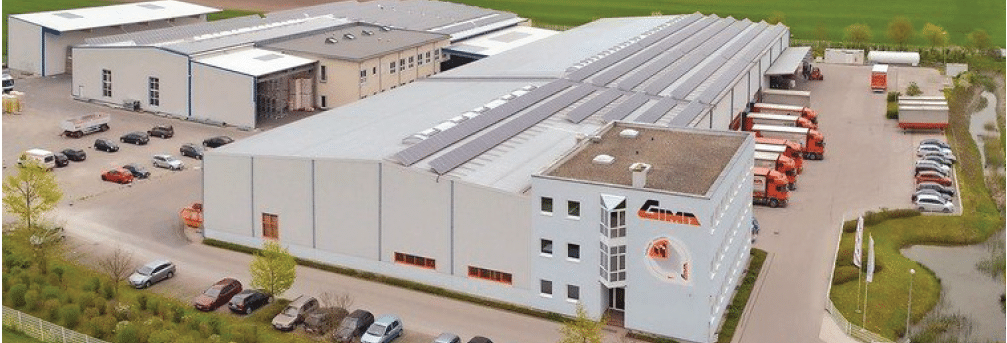
Approximately 50 truck trips per day with up to 30 unloading points: Even experienced planners find such demands challenging. If a mix of commercial and private customers is added, the planner’s capability is pushed to its limits. The experiences of GIMA, a trading company specialising in plastering and painting supplies, are all the more remarkable. The medium-sized family business operates a fleet of 30 trucks at its four largest branches, which are used for the aforementioned 50 trips in local and long-distance transport. The trucks are managed by four employees whose workplaces has been significantly digitised.
"After a brief introduction to the transport control centre,
one quickly feels confident, as OPHEO acts like a
co-pilot, handling many calculations, making
suggestions, and re-checking all decisions."
"I was a complete newcomer who had never before planned transport.
OPHEO made the transition easy for me.
Once you understand the software's functions,
you can immediately start with route planning."
Seamlessly Implemented
GIMA first introduced the software in 2016, deploying the transport control and telematics system opheo from Solvares Logistics. “We chose opheo due to the many positive references in the building materials trade and its proven interface to the Unitrade ERP system,” recalls Florian Wahler, who co-manages the IT department at GIMA. opheo is considered an industry standard in the building materials trade.
The implementation of opheo proceeded quickly and smoothly between the kickoff meeting in October 2015 and the “GoLive” in January 2016. A comprehensive testing phase took place between November and December 2015, and a two-day training for the planners. Following the commissioning at the headquarters in Neunstetten, the branches in Brandis, Maisach, and Nuremberg followed shortly after.
From Driver to Planner
In addition to its efficient route planning method with the self-developed Smart Planning technology, opheo impressed with its integrated telematics app opheo MOBILE and its extremely easy operation. “I was a complete newcomer who had never before planned,” confirms Jürgen Tillmann, who plans local transport routes in Neunstetten.
opheo made the transition easy for him. “Once you understand the software’s functions, you can immediately start with route planning,” says Tillmann, whose career at GIMA began in the warehouse. His colleague Marius Zahner from long-distance transport expresses a similar view: “After a brief introduction to the transport control centre, one quickly feels confident, as opheo acts like a co-pilot, handling many calculations, making suggestions, and re-checking all decisions,” says Zahner, who worked as a truck driver before moving to the office at GIMA.
The graphically supported route planning works simply via drag & drop, with opheo calculating the optimal sequence of unloading points upon request. “Regarding precise route planning, opheo has often taught me a better way,” admits Zahner, who only intervenes in the digital process for customer by exception.
Three Route Options
During the software implementation, all trucks were equipped with opheo MOBILE. The solution essentially consists of a telematics app that can be installed on commercially available Android-smartphones or tablets. GIMA opted for Galaxy Tab 4 tablets. As soon as the driver receives their opheo-generated trip via mobile network, they confirm it with a tap and then start navigation to the first unloading point. PTV Truck Navigator serves as the navigation solution. “One of the features of the solution is that each driver can choose between three possible route variants,” Zahner emphasizes.
This way, drivers can participate in decision-making and incorporate their personal knowledge of current construction sites into the planning. This aspect increased the solution’s acceptance, as did the fully automatic and precise recording of working and break times. This is achieved with the help of an interface to the “Webfleet” fleet management system used by GIMA. Current driving and rest time information from the tachographs is directly transmitted to opheo. opheo MOBILE supplements this data with actual working hours, so that all information for payroll is available in digital form.
Payroll Processing Eased for Accounting
“For our Finance department, the effort involved in driver payroll has been reduced by 70 percent as a result,” says Wahler. However, drivers also benefit: On the one hand, they are spared the tedious task of manual data entry, and on the other hand, no working hours are lost due to minute-by-minute documentation. “For most drivers, this resulted in payroll accuracy of two to three hours in their favour,” reports Zahner.
The interface between fleet management and opheo also offers advantages for planners: Current driving and rest times are immediately available in the Scheduling Cockpit and are evaluated there for trip planning and daily forecasting. With this integrated forecasting function, impending delays are detected very early, allowing planners to reschedule or inform customers.
Automated Notifications
The Transport team are additionally supported by the automated notification function. This automatically informs customers via email or SMS about the time of the upcoming delivery. The notification is triggered as soon as the truck falls below a predefined distance to the destination. Vehicle positions from the telematics app are continuously transmitted to and evaluated by the opheo server.
Conclusion: With opheo, GIMA has advanced digitalisation on several levels. Transport planners, drivers, customers, and central administration all benefit from enhanced visibility, better control and reduced administration.